Liquor Mafia Operating Under Official Blind Eye? Questions Mount Over Excise Accountability in Jammu & Kashmir
||Black and White Digital News||
||Parvinder Singh May 23 2026||
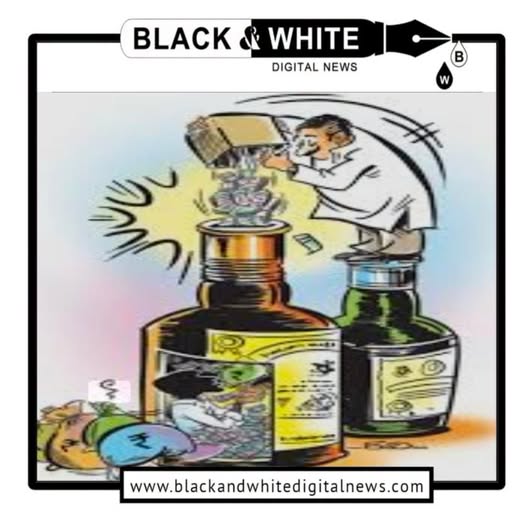
Jammu: Serious questions are being raised over the functioning and accountability of the Excise Department in Jammu and Kashmir amid increasing allegations of overcharging, illegal liquor trade, and sale of sub-standard alcohol across the Union Territory.
Jammu, known across the country as the “City of Temples,” has witnessed a sharp rise in liquor outlets over the past few years, triggering resentment among residents and civil society groups. Social media platforms are flooded daily with complaints alleging that liquor vends are openly charging consumers above the approved rates, causing financial burden on the public and potential loss to the State exchequer.
Despite repeated complaints, people allege that Excise officials remain largely absent from the ground, raising suspicions about possible high-profile links shielding what many describe as a well-organized liquor mafia operating across the region.
Questions are now being asked about whether influential networks are protecting illegal liquor operations and allowing violations of Excise norms to continue unchecked. Residents have also expressed concern over liquor outlets allegedly functioning near religious places and educational institutions, areas that were traditionally restricted under earlier Excise Policy guidelines.
Public anger has intensified over the government’s failure to introduce stringent provisions to curb illegal liquor dens, black marketing and overcharging practices. Citizens argue that weak enforcement mechanisms and lack of regular inspections have encouraged illegal operators to flourish.
Another major concern being raised relates to the quality of liquor being sold in the Union Territory. Civil society groups and consumers are demanding transparency regarding the number of liquor samples lifted for testing by the Excise Department and laboratories so far.
Questions being widely asked include:
How many liquor samples have been collected and tested in Jammu and Kashmir during the current financial year?
Are regular quality checks being conducted to ensure consumers are not being sold sub-standard or unsafe liquor?
What action has been taken against outlets found violating quality or pricing norms?
Why are inspection reports and laboratory findings not being made public?
Citizens have also demanded that the administration identify the alleged kingpins involved in liquor smuggling and illegal supply networks operating in Jammu and Kashmir.
Security experts and civil society members believe that vulnerable routes along interstate borders and remote areas require strict surveillance through coordinated operations by the Jammu and Kashmir Police and the Excise Department to prevent smuggling of illegal and sub-standard liquor into the Union Territory.
The administration led by Lieutenant Governor Manoj Sinha has consistently spoken about protecting youth from the dangers of drugs and illegal trade networks. However, citizens say stronger ground-level enforcement and accountability are now necessary to match those commitments.
Members of civil society have called for constitution of special enforcement teams, surprise inspections of liquor vends, strict action against overcharging, and public disclosure of quality testing reports to restore transparency and public confidence.
“The fight against black marketing, illegal liquor trade and substance abuse cannot succeed without accountability and coordinated action. Authorities must ensure that the law is applied equally and that no mafia network operates under political or administrative protection,” said a civil society member while speaking to the media.
The growing controversy has now placed the spotlight firmly on the Excise Department, with citizens demanding immediate corrective measures to safeguard public interest, government revenue and the cultural identity of Jammu and Kashmir.
Sunil Sharma
See less