International Day for Biological Diversity 2026 Celebrated in Leh with Focus on Indigenous Knowledge, Ecological Stewardship and Local Action for Global Impact.
Leh, May 22, 2026
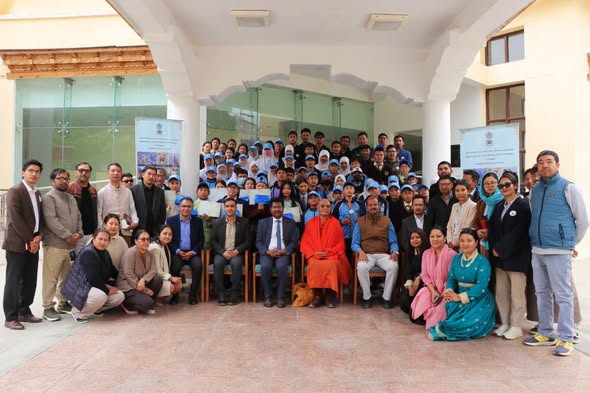
�The Ladakh Biodiversity Council, celebrated the International Day for Biological Diversity 2026 at the DIHAR Auditorium, Leh with a day-long seminar on the theme “Acting Locally for Global Impact”. The seminar brought together policymakers, researchers, educators, community representatives, students, biodiversity experts and practitioners to deliberate on innovative approaches to biodiversity conservation and sustainable development in Ladakh.
The event highlighted Ladakh’s unique ecological heritage, rich indigenous knowledge systems and community-driven conservation initiatives that contribute not only to local resilience but also to global biodiversity goals.
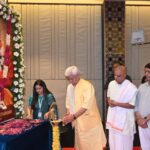
The inaugural address was delivered by the Chief Guest Shri Rajesh S., IFS, Addl. Principal Chief Conservator of Forests, UT Ladakh, who mentioned that Ladakh’s traditional lifestyles, indigenous farming systems, and local knowledge practices represent globally signify models of sustainable living.
Speaking on the occasion, he highlighted that Ladakh has historically evolved in harmony with nature, demonstrating how local communities can conserve biodiversity while sustaining livelihoods. He further stressed that biodiversity conservation is closely linked with climate resilience, water security, food systems and cultural identity.
Highlighting emerging environmental challenges, he spoke about the risk due to the ongoing climate change , including desertification, erratic weather patterns, habitat degradation and shifts in species distribution. He emphasized the importance of conserving Ladakh’s pristine wetlands, alpine ecosystems and water bodies that serve as critical habitats for diverse flora and fauna. Addressing students and youth participants, he called upon young people to become custodians of Ladakh’s fragile ecosystems and actively participate in biodiversity conservation initiatives.
The keynote address in the event was delivered by Ven. Bhikkhu Sanghasena, Founder President, Mahabodhi International Meditation Centre (MIMC), Leh, who spoke on the need to restore humanity’s spiritual and ethical relationship with nature. He emphasized that modern lifestyles often disconnect people from ecological realities and stressed that care for Mother Earth and all living beings is fundamental for collective peace and happiness. He also advocated for transforming education systems towards more nature-oriented and ecologically conscious learning approaches while maintaining harmony between spirituality and scientific understanding.
During the inaugural session, a Special Postal Card on Indigenous Food Diversity of Ladakh, prepared in collaboration with India Post, Leh, was formally released. The occasion also witnessed the release of the Annual Report 2025-26 of the Ladakh Biodiversity Council and a fact sheet on the Indigenous Food Diversity of Ladakh.
A special cultural highlight of the programme was a skit presented by students of Mahabodhi School, Leh on the Indus River Green Corridor Eco-Restoration Project. The performance beautifully portrayed the interdependence between the Indus River, biodiversity, local communities and ecological well-being in Ladakh.
In the event, the outstanding grassroots conservation efforts of The Environment Wing of M/s Jamiatul Ulama Isna Asharia, Kargil was felicitated for its large-scale afforestation initiatives, while Government Degree College, Drass was honoured for its campus biodiversity conservation and species documentation initiatives.
Technical sessions during the seminar covered topics including indigenous food systems, medicinal plants, livestock diversity, climate adaptation, biodiversity value chains and Access and Benefit Sharing (ABS) mechanisms under the Biological Diversity Act. Prominent speakers included Ms. Nilza Wangmo, Mr. Sonam Phuntsog, Dr. Iftikhar Ali, Dr. Tsewang Rinchen, Dr. Tsering Stobdan, Dr. Tsewang Dorjey, Dr. Kunzes Angmo, and Dr. V.A. Nambi.
The programme concluded with panel discussions on Access and Benefit Sharing (ABS) for biodiversity value chains in Ladakh chaired by Dr. Padma Gurmet, Director, National Institute if Sowa Rigpa/ Member, Ladakh Biodiversity Council and promotion of standardized local food in hotel industries and public health care institutions chaired by Dr. Niazul Khan, Consultant/ Member, Ladakh Biodiversity Council.