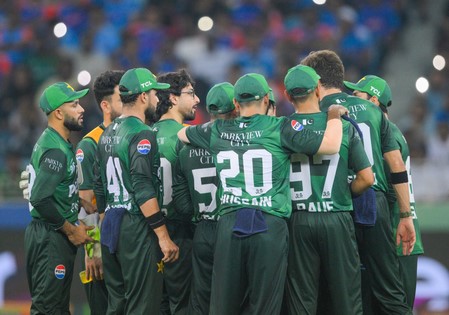
ICC Warns Pakistan Of Long-Term Consequences Over India Clash Boycott
The International Cricket Council (ICC) on Sunday said Pakistan’s decision to selectively participate in the upcoming ICC Men’s T20 World Cup 2026 and boycott its Group A clash against India undermines the integrity of global cricket and could have long-term consequences for the sport in the country.
The governing body issued a statement after a post by Pakistan’s government on X said it had granted permission for the Pakistan team to travel to Sri Lanka for the tournament, but not to take the field in the match against India scheduled for February 15 at the R. Premadasa Stadium in Colombo, without specifying a reason.
The ICC said it was still awaiting official communication from the Pakistan Cricket Board (PCB) on the matter.
“The ICC notes the statement made by the government of Pakistan regarding the decision to instruct its national team to selectively participate in the ICC Men’s T20 World Cup 2026. While the ICC awaits official communication from the Pakistan Cricket Board (PCB), this position of selective participation is difficult to reconcile with the fundamental premise of a global sporting event, where all qualified teams are expected to compete on equal terms as per the event schedule.”
“ICC tournaments are built on sporting integrity, competitiveness, consistency and fairness, and selective participation undermines the spirit and sanctity of the competition. While the ICC respects the role of governments in matters of national policy, this decision is not in the interest of the global game or the welfare of fans worldwide, including millions in Pakistan”, the ICC added.
“The ICC hopes the PCB will consider the significant and long-term implications for cricket in its own country, as this is likely to impact the global cricket ecosystem, of which it is itself a member and beneficiary. The ICC’s priority remains the successful delivery of the ICC Men’s T20 World Cup, which should also be the responsibility of all its members, including the PCB. It expects the PCB to explore a mutually acceptable resolution that protects the interests of all stakeholders,” the ICC said.
The India-Pakistan clash generates more revenue and typically draws higher viewership than any other match in ICC tournaments. To maximise commercial returns for all stakeholders, both teams have been placed in the same group in every tournament since 2012, despite deteriorating diplomatic ties between the two countries leading to no bilateral cricket for the past 14 years.
It remains unclear what would happen if the teams were to meet in a knockout match. Pakistan’s participation in the 2026 Men’s T20 World Cup had been shrouded in uncertainty after PCB chairman Mohsin Naqvi said the government would take the final call following Bangladesh’s removal from the tournament on January 24.
Bangladesh was excluded after refusing to play in India citing security concerns and was replaced by Scotland. Naqvi later met Prime Minister Shehbaz Sharif and said he had been advised to keep all options open, adding that a decision would be taken by “Friday or next Monday”.
Pakistan are placed in Group A alongside India, Namibia, the Netherlands and the United States of America (USA). All of Pakistan’s matches are scheduled to be played in Sri Lanka, which is co-hosting the tournament with India.
Pakistan open their campaign against the Netherlands on February 7, the opening day of the tournament, before facing the USA and Namibia on February 10 and 18, respectively.
Pakistan are in line to forfeit two points if they boycott the match against India. ICC playing conditions stipulate that Pakistan’s net run rate would also suffer from a forfeit. Clause 16.10.7 states that in a forfeit, “the full 20 overs of the defaulting team’s innings in such a forfeited match shall be taken into account in calculating the average runs per over of the defaulting team over the course of the relevant portion of the competition.”