President Murmu Calls For One Health Approach, Urges Collaboration Between Human, Animal And Environmental Health Experts

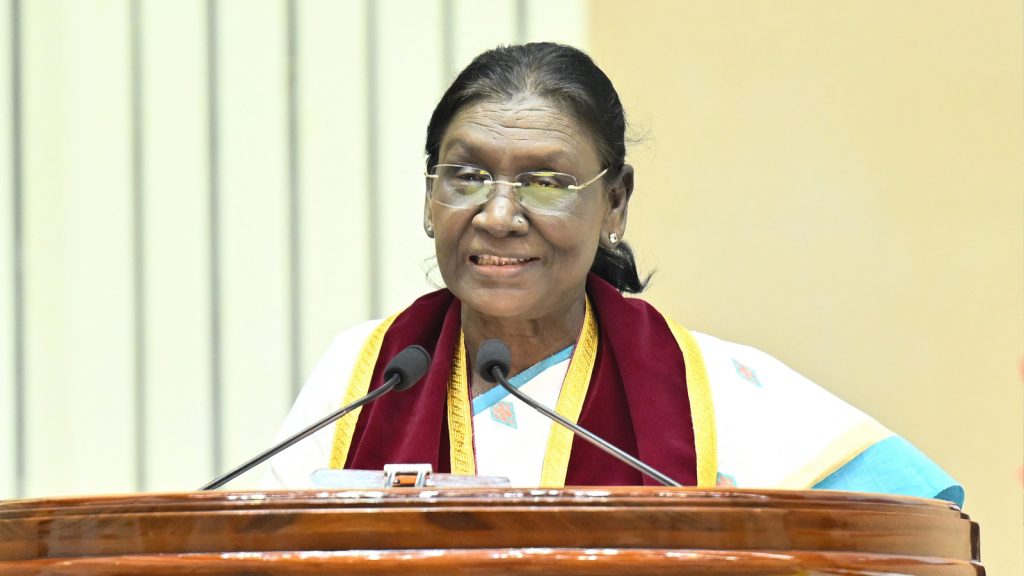
President Droupadi Murmu on Friday emphasised the importance of an integrated approach to healthcare, stating that collaboration among experts in human medicine, veterinary medicine and environmental science is essential to achieving the goal of ‘One Health’.
Addressing the 12th convocation of the Atal Bihari Vajpayee Institute of Medical Sciences and Dr Ram Manohar Lohia Hospital in New Delhi, the President highlighted the growing interdependence of human, animal, plant and environmental health and called for stronger cooperation across disciplines to address emerging health challenges.
President Highlights Importance of the One Health Approach
President Murmu said the concept of One Health has become increasingly important in global healthcare. As humans, animals, plants and the environment remain in constant interaction, health problems emerging in one domain can affect others.
She pointed out that several infectious diseases spread from animals to humans, while air and water pollution, climate change and environmental imbalances also pose serious threats to human health.
Against this backdrop, she stressed the need for coordinated efforts involving professionals from human medicine, veterinary medicine and environmental science. Such an integrated approach, she said, would support disease prevention and early detection while strengthening preparedness to deal with future health crises.
Local Health Conditions Must Guide Research and Treatment
President Murmu also underlined the importance of understanding the social, economic, nutritional and environmental conditions that influence people’s health. These factors, she said, have a direct bearing on both disease prevention and treatment.
She called for greater encouragement of research focused on treatment methods and preventive measures suited to local health challenges and circumstances.
Emphasis on Preventive and Promotive Healthcare
Referring to the evolution of India’s healthcare priorities, President Murmu said the Government of India revised the National Health Policy in 2017 in response to changing health needs.
The comprehensive and inclusive policy placed greater emphasis on preventive and promotive healthcare alongside curative services. It also strengthened the focus on rehabilitative and palliative care.
She noted that the growing burden of non-communicable diseases, including mental stress, diabetes and cancer, has made prevention an important priority, with special attention being given to different aspects of addressing these conditions.
Healthcare Expansion and the Role of Young Doctors
President Murmu said initiatives undertaken by the Government in the health sector over the past decade have had far-reaching effects, contributing to a significant expansion of healthcare services from the primary to the tertiary level.
Addressing the graduating doctors, she said their research and professional efforts could make healthcare more effective, accessible, affordable and people-centric.
She urged them to ensure that their knowledge and expertise benefit marginalised communities in remote areas and strengthen the country’s primary healthcare services. Their professional approach, she emphasised, should be guided by the objective of extending the benefits of medical skills and services to underprivileged sections of society.