PM Modi Shares Vice President Radhakrishnan’s Article On Yoga And Healthy Ageing, Calls It A Lifelong Wellness Practice

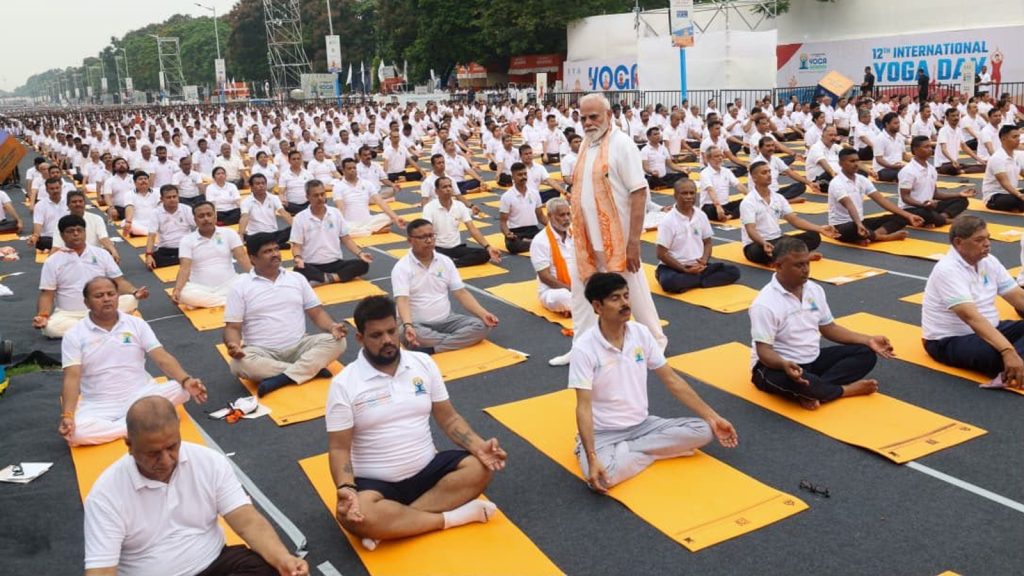
Prime Minister Narendra Modi on Sunday shared an article written by Vice President C. P. Radhakrishnan on the occasion of the 12th International Day of Yoga, highlighting the transformative role of yoga in promoting healthy ageing and overall well-being.
In a post on X, PM Modi said, “On the occasion of International Yoga Day, Hon’ble Vice President of India CP Radhakrishnan reflects on yoga and its profound impact on human well-being. Referring to this year’s theme, “Yoga for Healthy Ageing”, he notes that yogic practices have been thoughtfully adapted into gentle and accessible protocols suitable for senior citizens, drawing from his personal experiences. Highlighting yoga as India’s gift to the world, he urges everyone to embrace it as a lifelong cultural and wellness practice.”
In his article, V-P Radhakrishnan described yoga as an ancient discipline rooted in India’s spiritual wisdom that harmonises the body, mind and spirit. He recalled PM Modi’s proposal at the United Nations General Assembly in 2014, which led to the declaration of June 21 as the International Day of Yoga with the support of 174 countries.
Reflecting on his personal experiences with yoga and Panchakarma, the Vice President said the practices have significantly enriched his life and inspired him to share his thoughts on yoga’s contribution to human well-being.
Tracing yoga’s origins to India’s ancient civilisation, V-P Radhakrishnan highlighted the contributions of sages and scholars who developed a holistic system aimed at uniting the body, mind and soul. He also referred to Maharishi Patanjali, regarded as the father of classical yoga, and noted his spiritual association with Tamil Nadu.
Highlighting this year’s International Yoga Day theme, “Yoga for Healthy Ageing,” the Vice President said the subject assumes greater significance as populations across the world continue to age. Citing the India Ageing Report 2023 released by the United Nations Population Fund (UNFPA), he noted that nearly one in five Indians is expected to be above the age of 60 by 2050.
V-P Radhakrishnan stressed that increasing life expectancy should not merely add years to life but also add life to those years. He said that introducing yoga at an early age can help individuals enjoy its cumulative benefits throughout their lives. He also welcomed the inclusion of yoga as an important component of health and wellness education under the National Education Policy 2020.
The Vice President pointed to growing scientific evidence supporting yoga’s role in healthy ageing. He noted that studies conducted by leading institutions, including the National Institutes of Health and Harvard Medical School, have shown that regular yoga practice improves balance, flexibility and mobility among senior citizens, while reducing the risk of falls. Research has also highlighted yoga’s benefits in improving bone density, alleviating arthritis-related discomfort, enhancing respiratory efficiency, stabilising blood pressure and supporting mental well-being.
Beyond physical health, V-P Radhakrishnan emphasised yoga’s ability to foster emotional resilience, improve sleep quality and strengthen cognitive functioning. He also highlighted its role in addressing social isolation among the elderly by promoting a sense of connectedness and belonging.
Drawing from his own experience, V-P Radhakrishnan noted that yoga for healthy ageing does not require strenuous physical exertion, as traditional practices have been adapted into simple and accessible protocols suitable for senior citizens. He added that yoga also serves as a source of strength for caregivers and family members involved in elderly care.
The Vice President concluded by urging citizens, educational institutions, healthcare professionals, civil society organisations and community leaders to adopt yoga not merely as an occasional exercise but as a lifelong practice that promotes health, wellness and dignity in all stages of life.