J&K Cannot Generate Enough Revenue to Pay Salaries, Remains Dependent on Centre: Omar Abdullah
||Black and White Digital News ||
||Parvinder Singh July 2,2026||
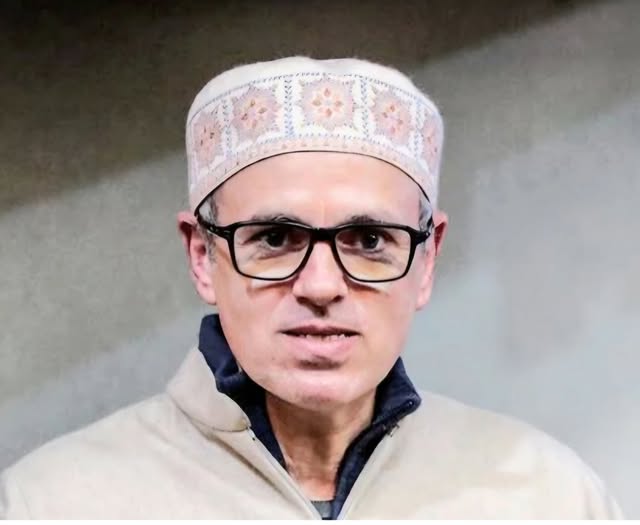
Srinagar: Jammu and Kashmir Chief Minister Omar Abdullah has expressed concern over the Union Territory’s fragile financial condition, stating that its own revenue is insufficient even to meet the salary bill of government employees, forcing it to remain heavily dependent on financial assistance from the Centre.
Speaking in an interview with media the Chief Minister said that despite combining all available revenue sources—including tax collections, the Central share, the State share, and other receipts—the government still falls short of generating enough income to pay salaries.
“We simply do not earn enough. Even after adding all tax revenues, the Central share, the State share and our other revenue sources, it is still not sufficient to meet the salary bill of government employees. After salaries, there are pensions and several other expenditures. Jammu and Kashmir’s financial condition is not good,” Omar Abdullah said.
Highlighting the extent of the fiscal stress, Abdullah noted that the government has to manage multiple financial commitments beyond salaries, including pension liabilities and other essential expenditures, placing significant pressure on the Union Territory’s finances.
Comparing Jammu and Kashmir’s financial capacity with that of economically stronger states, the Chief Minister said he wished the Union Territory had the resources to implement large-scale welfare programmes with ease.
“When I see other states, I wish we too had that kind of financial strength. Some Chief Ministers can announce schemes worth ₹6,000 crore overnight and transfer the amount directly into beneficiaries’ bank accounts. For us, even over five years, spending ₹6,000 crore in that manner would be extremely difficult,” he said.
Abdullah attributed the financial challenges to both the legacy of Jammu and Kashmir’s prolonged difficult circumstances and what he described as an institutional dependence on Central funding.
“Some of it is a legacy of the difficult situation Jammu and Kashmir has witnessed over the years. But some of it is also our own mindset. We have become accustomed to believing that everything has to come from the Centre and that we need not generate enough ourselves,” he remarked.
The Chief Minister said that as long as this dependence continues, successive governments in Jammu and Kashmir will have to maintain close coordination with the Central Government to secure the financial support necessary for meeting the Union Territory’s expenditure and development needs.
Abdullah’s remarks underscore the continuing fiscal challenges facing Jammu and Kashmir, with limited internal revenue generation and a heavy reliance on Central assistance to sustain government operations and public spending.
See less