J&K Secures Rs 10.5 Crore Under Jal Hi AMRIT Initiative; WRRC Reviews Wastewater Reuse Strategy
||Black and White Digital News ||
||Parvinder Singh June 25,2026||
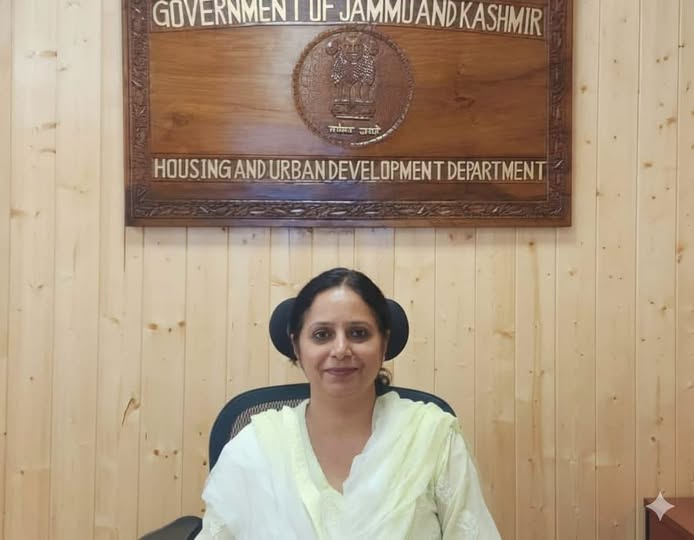
Srinagar : In a significant push towards sustainable water management and water circularity, the Water Resource Recovery Cell (WRRC) under the Jal Hi AMRIT (JHA) initiative of AMRUT 2.0 convened a meeting on Tuesday under the chairpersonship of Commissioner Secretary, Housing and Urban Development Department, Mandeep Kaur.
The meeting focused on developing strategies for the effective reuse of treated wastewater, particularly for non-potable applications, as part of the government’s broader efforts to promote water conservation and resource recovery.
Officials informed the meeting that the Housing and Urban Development Department is implementing AMRUT 2.0 through a series of water supply, sewerage, and water body rejuvenation projects across Jammu and Kashmir. Under the Jal Hi AMRIT sub-component, which was launched to incentivize the upgradation of Sewage Treatment Plants (STPs), Jammu and Kashmir has so far secured incentives amounting to Rs 10.50 crore.
The ongoing interventions under the initiative include the installation of Supervisory Control and Data Acquisition (SCADA) systems and tertiary treatment facilities aimed at enhancing wastewater quality and enabling its reuse for various purposes.
To strengthen inter-departmental coordination and ensure optimal utilization of treated wastewater, the Jammu and Kashmir Government has constituted the Water Resource Recovery Cell. The cell comprises representatives from the Agriculture, Horticulture, Industries and Commerce, Urban Local Bodies, Jal Shakti, Irrigation and Flood Control (I&FC), J&K Pollution Control Committee (JKPCC), Forest Department, and Chambers of Industries and Commerce.
During the meeting, members deliberated on the objectives and implementation framework of the Jal Hi AMRIT initiative launched by the Ministry of Housing and Urban Affairs and shared suggestions to improve its effectiveness.
Addressing the participants, Mandeep Kaur emphasized that treated wastewater meeting prescribed quality standards should be utilized for irrigating parks and gardens, industrial processes, construction activities, automobile washing, kitchen gardens, and reducing non-revenue water losses.
She highlighted that the initiative supports water conservation and circular economy principles by transforming wastewater into a valuable resource. The Commissioner Secretary also stressed the importance of rigorous quality testing to ensure the safe reuse of treated water.
Kaur directed the Jal Shakti Department and the Urban Environmental Engineering Department (UEED) to explore projects for establishing a dedicated network to supply treated wastewater to parks and gardens across Srinagar city.
She further informed that a working group would be constituted for Jammu to examine the feasibility of a comprehensive project aimed at the productive utilization of treated wastewater in the region.
The meeting was attended by the Chairman of the J&K Pollution Control Committee, Commissioners of the Jammu Municipal Corporation (JMC) and Srinagar Municipal Corporation (SMC), Special Secretary and Managing Director AMRUT, Directors of Urban Local Bodies of Jammu and Kashmir, Directors of Agriculture, Horticulture and Industries, Chief Engineers of UEED, Jal Shakti and I&FC departments, Chief Conservators of Forests, and Presidents of the Chambers of Industries and Commerce of Jammu and Kashmir.
The Jal Hi AMRIT initiative is aimed at improving wastewater management infrastructure and encouraging the reuse of treated water, thereby reducing pressure on freshwater resources and fostering sustainable urban development.
See less