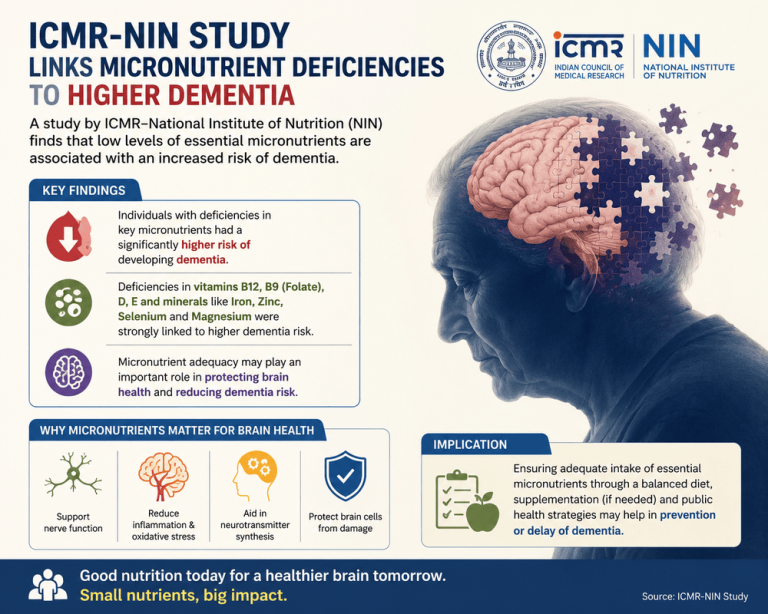
ICMR-NIN Study Links Micronutrient Deficiencies To Higher Dementia

A study conducted by the ICMR-National Institute of Nutrition (ICMR-NIN) has found a significant association between micronutrient deficiencies and a higher risk of dementia among Indian adults, highlighting the potential role of nutrition in preventing cognitive decline and promoting healthy ageing.
With rising life expectancy, India is witnessing a rapid increase in its elderly population, accompanied by a growing burden of age-related non-communicable diseases, including dementia. Low- and middle-income countries such as India account for nearly 60 per cent of the global dementia burden.
While genetic factors contribute to dementia, nearly half of all cases are linked to modifiable risk factors such as hypertension, diabetes, obesity, physical inactivity, smoking, depression and social isolation. Nutrition, particularly adequate intake of micronutrients, is increasingly being recognised as an important determinant of brain health.
The community-based cross-sectional study assessed 556 adults aged 40-80 years from rural and urban areas of Telangana. Researchers used a culturally adapted version of the widely used Cardiovascular Risk Factors, Ageing and Incidence of Dementia (CAIDE) score to evaluate dementia risk and examine its association with micronutrient status.
Cognitive performance was assessed using the Montreal Cognitive Assessment (MoCA) tool, while blood vitamin concentrations were measured through advanced analytical techniques. Dietary intake and dietary diversity were also evaluated.
The study found that nearly 40 per cent of participants were classified as having a higher predicted risk of dementia. Individuals in the high-risk category exhibited significantly poorer nutritional status, with deficiencies of vitamins D, B2, B6 and B12 being substantially more prevalent.
Participants with a higher dementia risk also reported lower dietary diversity, greater consumption of saturated fats and lower intake of unsaturated fats. Vitamin deficiencies were found to be more common among rural participants than urban residents, indicating rural-specific vulnerabilities that may contribute to increased dementia risk.
The findings further suggest that diets rich in micronutrients, particularly fruits and vegetables, are associated with a lower burden of dementia risk factors.
Dr. G. Bhanuprakash Reddy, Scientist G at ICMR-NIN and lead investigator of the study, said India’s ageing population is expected to lead to a substantial rise in dementia cases by 2050.
“Our findings highlight that micronutrient status is closely linked with the burden of dementia risk factors among Indian adults. Although the cross-sectional design of this study restricts the ability to draw causal inferences, the study emphasises that nutrition, particularly micronutrient adequacy and dietary diversity, represents a modifiable factor that can be targeted through public health interventions,” he said.
Dr. Bharati Kulkarni, Director of ICMR-NIN, said that in the absence of effective disease-modifying therapies for dementia, prevention through early identification of risk factors remains critical.
“This study provides important evidence that nutritional factors, especially micronutrient status, should be integrated into future dementia prevention strategies,” she said.
The study was conducted in collaboration with researchers from the Stanford Center for Innovation in Global Health and the Karolinska Institute. The findings have been published in the The Lancet Regional Health – Southeast Asia.