Alleged Misuse of RTI Applications in JMC Raises Concern; Calls Grow for Probe Into Suspected Blackmail Nexus
||Black and White Digital News ||
||Parvinder Singh Aug 17, 2026||
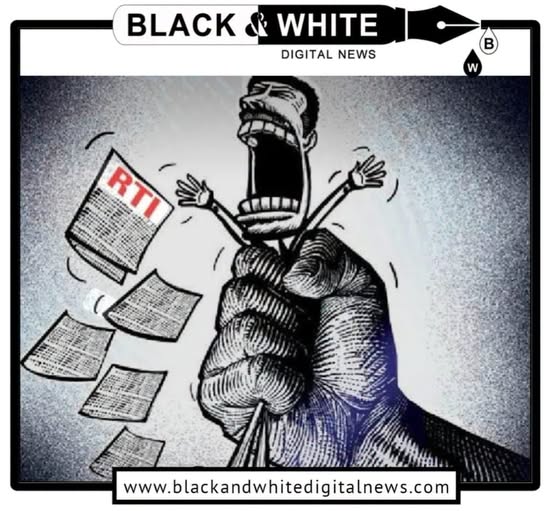
Jammu: Concerns have been raised over the alleged filing of a large number of Right to Information (RTI) applications concerning the Jammu Municipal Corporation (JMC), particularly its Building Section, with civil society members and RTI activists calling for an impartial fact-finding inquiry into whether the transparency mechanism is being misused to exert pressure on property owners, builders or other members of the public.
According to sources, a single individual has reportedly filed more than 100 RTI applications in a year concerning the JMC Building Section and matters relating to construction activity within the municipal limits. The volume and recurring nature of the applications have reportedly triggered questions among some officials and members of the public about whether the RTI mechanism is being used solely for obtaining information in the public interest or for other purposes.
Sources have further alleged that certain persons within the system may be facilitating access to information and that the possibility of an organised nexus warrants examination. These allegations have not been independently established and require verification through a lawful and impartial inquiry.
The issue assumes significance as the RTI Act is intended to promote transparency, accountability and public access to information. At the same time, the filing of multiple RTI applications, even in large numbers, is not by itself an offence, and every citizen is entitled to exercise the statutory right to seek information in accordance with the law.
Meanwhile, JMC Commissioner Dr. Devansh Yadav, IAS, has reportedly issued directions regarding the handling of information pertaining to the Building Section, particularly in cases involving specific categories of information and applicants. The directions are being viewed by some officers as an attempt to establish a clearer, legally compliant mechanism for processing RTI requests while ensuring that genuine applicants continue to receive information as mandated under the RTI Act.
Civil society representatives and RTI activists have also reportedly expressed concern over allegations of the possible commercialisation or misuse of RTI applications, particularly where repeated requests may allegedly be followed by attempts to pressure individuals. Some senior citizens have urged the authorities to examine any complaints or evidence relating to alleged harassment, blackmail or extortion.
Calls for coordinated inquiry
In view of the allegations, there are growing calls for the District Magistrate Jammu, SSP Jammu and Commissioner JMC to consider an appropriate fact-finding mechanism to establish the facts, including the volume and nature of applications, the manner in which information is being obtained and whether any officials or private individuals are facilitating an unlawful arrangement.
Any allegation of blackmail, extortion, harassment or official collusion, however, must be established through evidence and due process and should not be presumed merely because a person has filed numerous RTI applications.
‘Lightning May Strike’ on alleged blackmail network
Sources familiar with the developments also suggest that in the coming days, “lightning may strike” against those found involved in any alleged blackmailing activity or systematic misuse of voluminous RTI applications in the JMC. If an inquiry establishes that any newspaper, media platform, individual or intermediary has been involved in using RTI applications as a means to threaten, pressure or obtain an unlawful benefit from citizens, appropriate action would have to be taken strictly in accordance with law.
At the same time, any such inquiry must carefully distinguish between legitimate journalism, whistle-blowing and lawful RTI activism on one hand, and proven blackmail, extortion or collusion on the other. No individual, newspaper or organisation should be branded guilty without credible evidence and due process.
The controversy has therefore brought renewed focus on the need for a transparent system within the JMC to deal with RTI applications, particularly those concerning construction and Building Section records. A fair and independent inquiry could establish whether the unusually high volume of applications represents legitimate public-interest scrutiny or whether there is any organised attempt to exploit the RTI mechanism.
The outcome of any such inquiry will be closely watched, as the central issue remains the protection of both the public’s right to information and the public’s right to be protected from any proven misuse of the transparency framework.