PM Modi Urges Lok Sabha To Pass Women’s Reservation Bill, Calls It Historic Opportunity For Nari Shakti

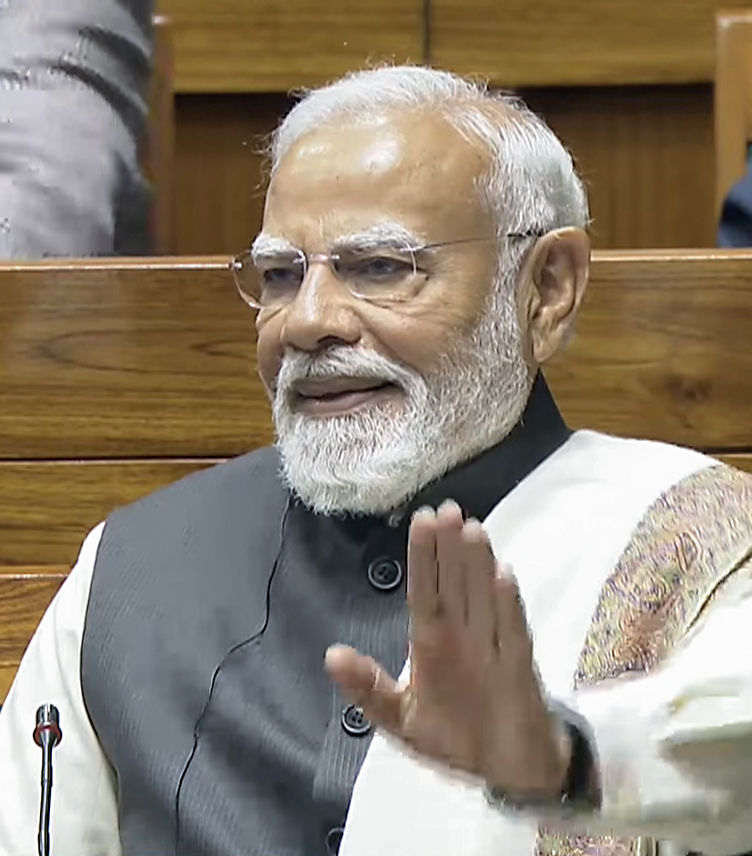
PM Modi urges Lok Sabha to pass women’s reservation bill, calls it historic opportunity for Nari Shakti on Thursday addressed the Lok Sabha, describing the debate on the women’s reservation bill as a historic opportunity to empower Nari Shakti and strengthen India’s democracy.
Acknowledging that the discussion had begun early in the morning, the Prime Minister noted that many members had effectively raised important issues based on facts and logic. He said crucial moments in a nation’s life are defined by the societal mindset and leadership of the time, and the current juncture in India’s parliamentary democracy was one such historic moment.
PM Modi remarked that the idea should have been implemented 25 to 30 years ago so that it could have matured by now. Highlighting India’s identity as the Mother of Democracy, he said all members of the House had received an auspicious opportunity to add a new reformative dimension to a millennia-old legacy.
“Making half of the country’s population active participants in policy-making is an incredible privilege,” the Prime Minister said, urging MPs not to let this vital opportunity slip away. He added that all Indians were preparing to infuse the governance system with deep sensitivity to shape the nation’s future. “We stand at such a crucial turning point where the nectar emerging from this churning will decide the nation’s direction,” he observed.
Referring to India’s new self-confidence in the 21st century and its growing global acceptance, PM Modi said the vision of a developed India (Viksit Bharat) required meaningful integration of the ‘Sabka Saath, Sabka Vikas’ mantra into policy-making. He stressed that including 50 per cent of the population in policy formulation was an urgent demand. Despite past delays, no party had opposed the bill in principle during his extensive private consultations, he noted.
The Prime Minister emphasised that history shows collective action ultimately benefits the nation’s democracy rather than individual political entities. “Therefore, I feel there is absolutely no need to give this a political colour, as everyone’s true benefit lies in supporting it,” he said.
Reflecting on his experience as an organisational worker, PM Modi recalled how reservations at the panchayat level were accepted more easily because they did not threaten the positions of higher leaders. He pointed out that local reservations had successfully reached 50 per cent without affecting Parliament. Warning against underestimating historical shifts, he said that unlike 25 or 30 years ago, there was now a profound political consciousness among women.
Millions of women who have won panchayat elections have evolved from silent observers into vocal grassroots opinion makers, he noted. These women, who have effectively managed public grievances, are now demanding inclusion in legislative assemblies and Parliament. PM Modi urged ambitious politicians to recognise this shift, saying these female leaders would heavily influence future electoral outcomes.
The Prime Minister called upon the House to place complete trust in the understanding of the nation’s women. Once 33 per cent representation is achieved, female legislators will be capable of deciding further sub-allocations for different classes and groups without patriarchal oversight, he said. Recalling his own roots in a backward community, he emphasised that his constitutional duty was to take every section of society along and that the Constitution remained supreme.
PM Modi highlighted the phenomenal achievements of women across all spheres and questioned the rationale behind expending political energy to block such a capable demographic. Integrating women into legislative bodies would exponentially increase the nation’s overall capacity, he said, and appealed to lawmakers to evaluate the step on the basis of national interest rather than petty electoral calculus. “I appeal to you not to weigh this on the scales of politics,” he remarked.
The Prime Minister warned that the female electorate would scrutinise the intentions behind the legislative decision even more closely. “The Nari Shakti of this country will never forgive any flaw in our intentions,” he stated.
Recalling the unanimous acceptance of the bill in the new Parliament building in 2023, The Prime Minister Modi explained the delays in implementation due to census and delimitation issues, compounded by the COVID-19 pandemic. He cautioned that missing the 2029 opportunity would permanently shatter public trust and urged the House not to delay the bill any further.
Addressing concerns over delimitation, the Prime Minister assured the House that the new process would not discriminate against any state or region. Demographic proportions established during previous governments would be maintained, and seat increases would occur fairly, he said. “This decision-making process will absolutely not do injustice to anyone,” he affirmed.
PM Modi stressed that no one should operate under the illusion that they were ‘giving’ something to women, as it was their fundamental right. He said the political establishment was collectively guilty of withholding this right for decades, making the bill an act of atonement. “You have stopped it for three decades, now you must finally do it,” he remarked.
The Prime Minister declared he had no interest in claiming personal or party credit, saying a unified approach would transform the narrative. He noted that women’s participation in parliamentary democracy went beyond numbers and represented India’s cultural commitment as the Mother of Democracy. Citing the success of 50 per cent reservation in panchayats across more than 20 states, he shared his experience as Chief Minister, where women leaders proved highly effective in problem-solving and empathetic governance.
Providing data, PM Modi said nearly 275 women currently lead over 650 district panchayats, managing budgets often larger than those of central Cabinet ministers. Out of approximately 6,700 block panchayats, more than 2,700 are headed by women, and women also serve as mayors and standing committee heads in over 900 cities.
The Prime Minister asserted that passing the reservation bill would allow the nation to repay the profound debt owed to these grassroots women leaders. “When this vast administrative experience joins the House, it will multiply our strength immensely,” he said.
Concluding his address, the Prime Minister reiterated that half the population had an undeniable right to sit in the House. Expanding the total number of seats would accommodate the 33 per cent quota without displacing existing members, he noted, adding that the new Parliament building was designed to house this additional legislative strength.