Supreme Court’s Tough Stance on Bulldozer Justice: No Demolition Even for Convicts, Illegal Structures Still Vulnerable
||Black and White Digital News ||
||September 03,2024 ||
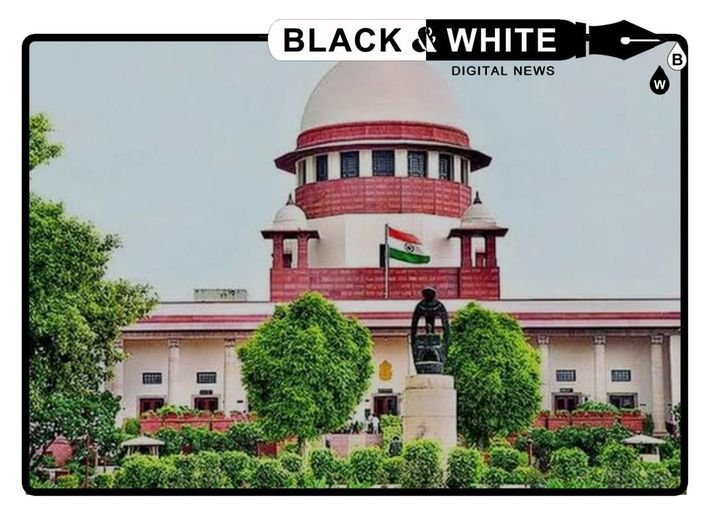
The Supreme Court of India issued a strong rebuke against the practice of bulldozer justice on Monday, underscoring that the mere accusation of a crime does not justify the demolition of a person’s property. The court emphasized that even if a person is convicted, demolishing their property without due legal process is unacceptable.
A bench comprising Justices B.R. Gavai and K.V. Viswanathan delivered this warning while hearing a series of petitions challenging the increasingly common practice where state authorities demolish the properties of individuals accused of serious crimes. The court stressed that property demolition must adhere to the established legal procedure, which includes proper notice and the opportunity for the accused to seek legal remedies.
Justice Viswanathan drew attention to the potential for misuse of such actions, noting that even a family member’s wrongdoing should not automatically result in the destruction of shared property. The bench expressed its intention to establish clear, nationwide guidelines to prevent arbitrary demolition practices, ensuring that due process is followed in all cases.
While the court maintained that illegal structures, particularly those obstructing public roads, would not be shielded from demolition, it clarified that lawful property rights must be respected. The bench criticized the current practice, questioning how authorities could justify demolishing a house merely because its owner is accused of a crime, and emphasized that even conviction does not negate the need for legal procedures.
The Supreme Court’s intervention comes in response to a growing trend where state governments, particularly in BJP-ruled states, have employed bulldozer demolitions as a punitive measure against those accused of serious offenses. This approach has drawn widespread criticism for bypassing due process and disproportionately affecting marginalized communities, including minorities.
The court’s remarks follow increasing concerns about the potential misuse of power by state authorities and the targeting of specific communities through demolition actions. Congress President Mallikarjun Kharge recently labeled these actions as “deeply troubling,” particularly for their impact on minorities.
The matter has been scheduled for further hearing on September 17, where the Supreme Court is expected to lay down comprehensive guidelines to ensure that demolition actions are conducted lawfully and fairly across India. This ruling could significantly impact the approach of state governments towards handling properties associated with criminal accusations, emphasizing the need for justice and due process over punitive populism.