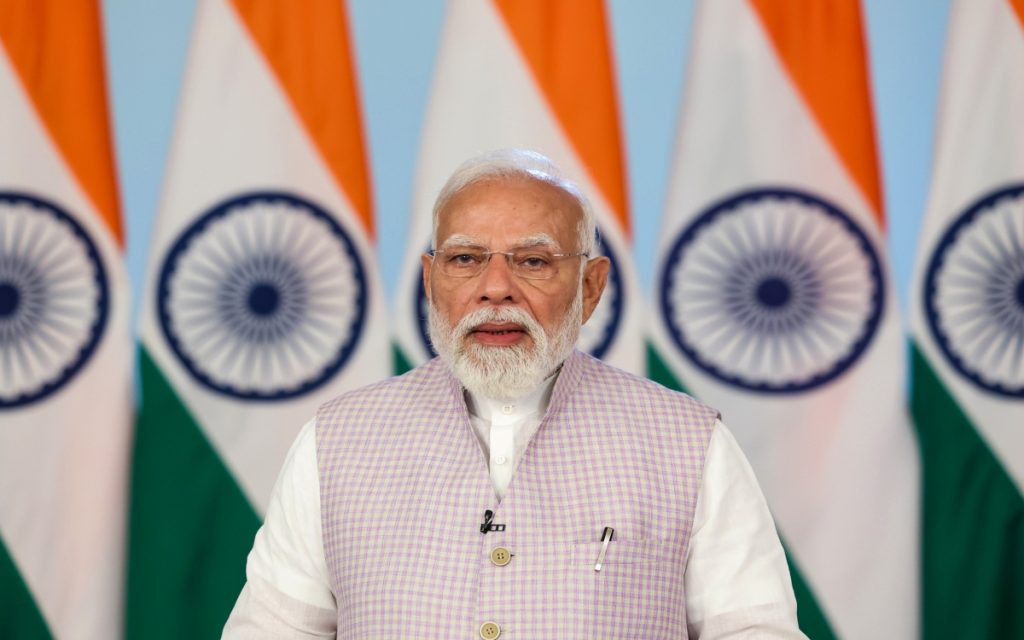
PM Modi Hails Milestone As India’s First Indigenous Fast Breeder Reactor Attains Criticality

Prime Minister Narendra Modi on Monday lauded a major milestone in India’s nuclear energy programme as the country’s first indigenous Prototype Fast Breeder Reactor (PFBR) in Tamil Nadu’s Kalpakkam attained criticality.
Describing the development as a “defining step in India’s civil nuclear journey,” the Prime Minister said the achievement marks significant progress in the second stage of India’s three-stage nuclear programme.
“Today, India takes a defining step in its civil nuclear journey, advancing the second stage of its nuclear programme. The indigenously designed and built Prototype Fast Breeder Reactor at Kalpakkam has attained criticality,” PM Modi said in a post on X.
Highlighting the technological significance of the reactor, he added, “This advanced reactor, capable of producing more fuel than it consumes, reflects the depth of our scientific capability and the strength of our engineering enterprise. It is a decisive step towards harnessing our vast thorium reserves in the third stage of the programme.”
Calling it a “proud moment for India,” the Prime Minister congratulated the scientists and engineers involved in the project.
The 500 MWe PFBR, developed by Bharatiya Nabhikiya Vidyut Nigam Ltd (BHAVINI), represents a key component of India’s long-term nuclear strategy. Once fully operational, India will become only the second country after Russia to have a commercial fast breeder reactor.
The project has been built indigenously with contributions from over 200 Indian industries, including several MSMEs, aligning with the government’s push for self-reliance under the Aatmanirbhar Bharat initiative.
Fast Breeder Reactors are designed to generate more fissile material than they consume. The PFBR uses Uranium-Plutonium Mixed Oxide (MOX) fuel, while a surrounding “blanket” of Uranium-238 undergoes transmutation to produce additional fuel. In later stages, Thorium-232 will be used to produce Uranium-233, paving the way for the third stage of India’s nuclear programme and enabling utilisation of the country’s vast thorium reserves.
The reactor is also equipped with advanced passive safety features, ensuring automatic and safe shutdown in case of emergencies.
PM Modi had earlier visited the facility in 2024 to witness the commencement of core loading, where he reviewed the reactor’s key features and infrastructure.
The attainment of criticality marks a crucial step before full commissioning, strengthening India’s position in advanced nuclear technology and clean energy generation.