Discontent Brewing in J&K BJP Over Seat Allotment; Two More Leaders Quit
||Black and White Digital News ||
||September 01,2024 ||
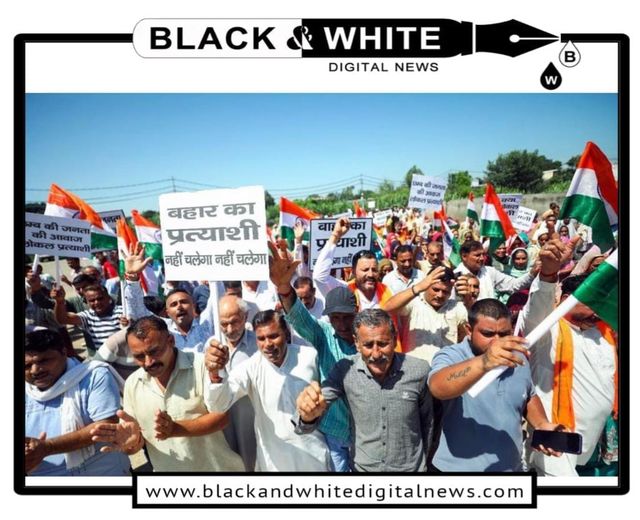
The BJP in Jammu and Kashmir is facing mounting internal dissent as discontent over seat allotment for the upcoming Assembly elections has led to the resignation of several senior party leaders. The party’s decision-making process has come under fire, especially after two prominent leaders, Kashmira Singh and Chander Mohan Sharma, publicly announced their departure within the last 24 hours.
Resignations Spark Concerns Over Candidate Selection:
Kashmira Singh, a veteran BJP leader who served as the former Jammu district president, resigned from all posts and membership of the BJP, expressing his dismay at being overlooked for a ticket despite over four decades of service to the party. Singh’s resignation follows that of Chander Mohan Sharma, another senior leader, who stepped down on Friday and hinted at running as an Independent candidate after being dissatisfied with the party’s choice of candidates.
Sharma criticized the party’s decision to nominate candidates he described as “outsiders” who did not align with the BJP’s ideology. He particularly expressed his frustration over the selection process for the Jammu East Assembly seat, an area he had campaigned to represent. Sharma, previously a Rajya Sabha candidate for the BJP, lost to Ghulam Nabi Azad, adding to his grievances.
Widespread Discontent and Resignations:
The resignations of Singh and Sharma are not isolated incidents. Earlier, the district president of Samba and the vice-president of Ramban also left the party over similar concerns. The ongoing departures reflect a broader dissatisfaction within the party ranks, particularly among those who have been loyal to the BJP for years but feel sidelined in the current ticket distribution process.
Party Leadership’s Response:
Despite the evident dissatisfaction, BJP national general secretary Tarun Chugh has downplayed the internal strife, emphasizing the party’s commitment to its cadre-based structure. Chugh dismissed the controversy surrounding the ticket distribution as an outcome of “clerical mistakes” and assured that the party’s democratic processes allow for open expression of opinions. He further contrasted the BJP’s approach to leadership with what he described as the “autocratic” methods of other parties.
Controversial Candidate List Revision:
The controversy intensified last week when the BJP withdrew its initial list of 44 candidates following widespread protests from party members. The revised list, which included only 19 names for the first phase of elections, has done little to quell the unrest. The party’s decision to make significant changes has been seen by some as an attempt to mitigate the backlash, but it has also raised questions about the party’s candidate selection process.
Key Leadership Changes:
Among the significant developments, BJP President Ravinder Raina is set to contest from the Nowshera constituency, while former Deputy Chief Minister Kavinder Gupta will contest from the Bhau seat. However, the exclusion of Rajesh Gupta, working president of VHP, and Arun Gupta, president of the Jammu Chamber of Commerce, from the candidate list has raised further concerns among BJP workers. Additionally, the absence of a mandate for former Deputy Chief Minister Nirmal Singh has fueled speculation, with the party yet to clarify the reasons for his exclusion.
Election Schedule:
The election for the 90-seat J&K Assembly is scheduled to be held in three phases on September 18, 25, and October 1. As the BJP navigates the brewing discontent within its ranks, the party’s ability to present a united front in the upcoming elections remains a critical challenge.