DIET Leh Commences Two-Day Capacity-Building Workshop for Heads of Institutions and School Management Committees of Leh Zone
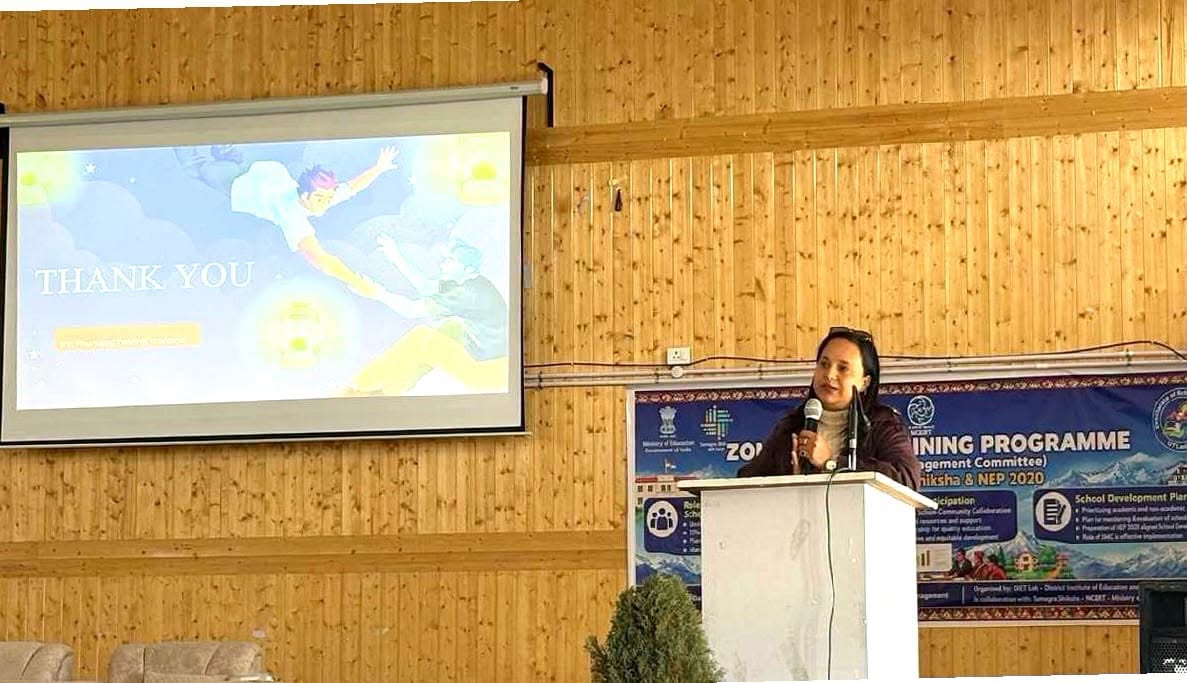
Leh, Ladakh | 23 October 2026: The District Institute of Education and Training (DIET), Leh, today commenced a Two-Day Capacity-Building Workshop for Heads of Institutions (HoIs) and School Management Committees (SMCs) of Leh Zone. The
workshop, being held on 23 and 24 October 2026, aims to strengthen school governance, enhance community participation, and foster collaborative efforts to improve the quality of education in alignment with the objectives of the National Education Policy (NEP) 2020 and Samagra Shiksha.
The programme is being conducted under the directions of the Director, School Education
Department, UT Ladakh, Shri Tsering Paldan, and under the guidance of the Principal, DIET Leh, Shri S. D. Namgail. The workshop is being coordinated by the DIET faculty team led by Smt. Tsewang Dolma, Head of Department, HOD, DIET, Leh along with Ms.
Chetna Sharma and Ms. Kunzes Dolma, Senior Lecturers, DIET Leh.
The workshop has brought together Heads of Institutions, SMC members, and school representatives to deliberate on their roles and responsibilities in effective school management, student welfare, inclusive education, and the holistic development of learners.
Chief Education Officer (CEO), Leh, Smt. Deldan Angmo, conducted a focused session on the enrolment drive and the crucial role of SMCs in ensuring universal enrolment and regular student attendance. The session emphasised community mobilisation, parental awareness, identification of out-of-school children, and the collective efforts of schools, SMCs, parents, and local communities in reducing absenteeism and dropout rates while
strengthening student enrolment.
The first day of the workshop featured an insightful presentation by Mr. Dorjey Wangchuk, Senior Lecturer, DIET Leh, followed by interactive discussions with the participants. In his detailed presentation, he elaborated on the pivotal role of School Management Committees (SMCs) in strengthening school governance and fostering community participation in education. He highlighted the composition, functions, and statutory responsibilities of SMCs, with particular emphasis on their role in ensuring transparency, accountability, and inclusive decision-making processes in schools.
Zonal Education Officer (ZEO), Leh, Smt. Padma Deachen, also addressed the participants and highlighted the significant role of School Management Committees in promoting school development and improving educational outcomes.
The workshop also included an important session on mental health and prevention of drug and substance abuse, conducted by Ms. Phuntsok Tsering Wangmo, Clinical Psychologist. The session sensitised participants to the importance of mental well-being, early identification of mental health concerns, and the need to create supportive and safe school environments. It further underscored the shared responsibility of schools, parents, and SMCs in promoting awareness, prevention, and student support.
A special feature of the workshop was the screening of best-practice videos showcasing successful initiatives undertaken by SMCs in various schools. These examples demonstrated how active collaboration among school administration, parents, SMC members, and the wider community can lead to meaningful improvements in school functioning and student learning outcomes.
An interactive group activity on case-study analysis, facilitated by Ms. Chetna Sharma and Ms. Kunzes Dolma, engaged participants in examining real-life school challenges and developing collaborative solutions. Participants also worked on preparing School Action Plans, identifying institutional priorities and strategies for sustainable school improvement.
The second day of the workshop, scheduled for 24 October 2026, will focus on the presentation and discussion of School Action Plans and School Improvement Plans, enabling participants to share perspectives and strengthen planning processes for the effective development of their schools.
Through this initiative, DIET Leh reaffirms its commitment to strengthening institutional capacities, promoting participatory school governance, fostering meaningful community engagement, and ensuring quality, inclusive, and equitable education for all learners across Ladakh.See less