MHA Tightens Watch on IAS, IPS Officers; 48-Hour Deadline for Reporting FIRs, Arrests and Probe Action
Centre orders AGMUT administrations to promptly report criminal cases, adverse court orders and investigating-agency action; prolonged leave and pending disciplinary proceedings also come under scrutiny
||Black and White Digital News ||
||Parvinder Singh Oct 05,2026||
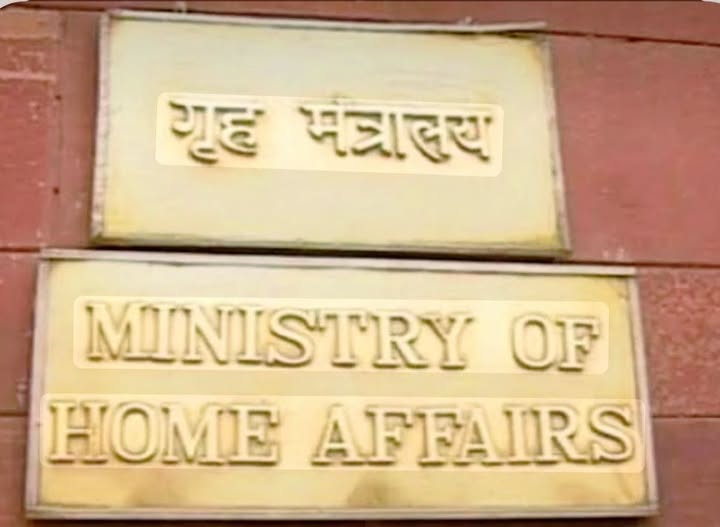
NEW DELHI : The Union Ministry of Home Affairs (MHA) has stepped up its monitoring of officers belonging to the AGMUT cadre, directing all concerned administrations to report within 48 hours any FIR, arrest, adverse court order or action by investigating agencies involving IAS, IPS, DANICS and DANIPS officers.
The directive, which covers investigative action by agencies including the Central Bureau of Investigation (CBI), Enforcement Directorate (ED) and Anti-Corruption Bureau (ACB), is aimed at ensuring that the Union Government is kept informed without delay about criminal cases, investigations, judicial developments and disciplinary action involving senior civil and police officers.
The latest instructions assume significance as the MHA has reportedly observed delays in the reporting of such developments by local administrations. The new 48-hour reporting requirement is expected to establish a more immediate flow of information between the AGMUT segments and the Union Home Ministry, enabling the Centre to monitor sensitive cases involving senior officers at an early stage.
The order effectively places greater responsibility on the administrations concerned to ensure that developments relating to officers are promptly documented and communicated to the Centre. Any delay in reporting matters such as registration of FIRs, arrests, adverse judicial orders or action by investigative agencies could now attract closer administrative scrutiny.
Alongside the reporting mechanism, the MHA has ordered a detailed review of officers who have remained on prolonged leave. The administrations have been asked to verify leave records, including the nature and duration of leave, extensions granted and the reported place of stay of the officers concerned. The ministry has also directed that salaries should be paid only for periods covered by duly sanctioned leave.
Where any excess salary payment is detected, the amount is to be recovered in accordance with the applicable rules. Officers who remain absent for prolonged periods without adequate explanation, or who fail to return to duty despite official directions, may also face disciplinary action under the relevant service provisions.
The move is likely to bring greater scrutiny to cases of prolonged absence from government service, particularly where questions arise over the validity of leave, repeated extensions or failure to resume duty. It also places an obligation on administrative departments to maintain accurate leave and salary records and to take timely action where irregularities are detected.
The MHA has further directed AGMUT segments to submit details and supporting documents relating to pending disciplinary cases by October 15. The status of each case is to be clearly indicated, including whether the proceedings are at the pre-charge-sheet or post-charge-sheet stage. The requirement is expected to give the Centre a consolidated picture of pending disciplinary proceedings and help monitor cases that have remained unresolved for extended periods.
For Jammu & Kashmir, the ministry has issued additional directions concerning the cadre management of IAS and IPS officers. The administration has been asked to expedite the collection of Annual Performance Appraisal Reports (APARs) and the preparation of documents relating to pending proposals for induction into the IAS and IPS. The records are to be kept ready for submission to the Union Public Service Commission (UPSC) once the vacancies are finalised.
The directions assume particular importance for Jammu & Kashmir as the administration continues to manage cadre-related matters involving senior civil and police officers. Timely completion of APARs and other documentation could help prevent delays in processing induction proposals once vacancies become available.
The combined effect of the MHA’s latest directions is likely to be a significant tightening of administrative oversight across the AGMUT cadre. Criminal proceedings, investigative action, adverse court orders, disciplinary cases, prolonged absence and cadre-related matters will now be subject to closer and more time-bound monitoring by the Centre.
For senior officers, the order signals increased scrutiny of both official conduct and service-related matters. Developments that previously may have taken considerable time to reach the MHA will now be required to be communicated within a fixed 48-hour period. The requirement could also ensure that the Centre has timely information while taking decisions relating to cadre management, disciplinary action and other service matters.
For local administrations, the order is expected to increase accountability and impose greater emphasis on record-keeping, timely reporting and follow-up action. Departments will have to maintain updated information on court cases, investigations, disciplinary proceedings and leave records and ensure that prescribed deadlines are followed.
The review of prolonged leave could also have a direct financial and administrative impact, particularly in cases where salaries have been released beyond periods covered by sanctioned leave. Recovery of excess payments and possible disciplinary proceedings in cases of unexplained or unauthorised absence could follow where violations are established.
The AGMUT cadre covers Arunachal Pradesh, Goa, Mizoram and the Union Territories, including Jammu & Kashmir. The latest directions therefore have implications across the entire cadre and represent a broader effort by the MHA to strengthen central oversight, improve administrative discipline and ensure that significant developments concerning senior officers are reported to the Union Government without delay.
The order, in effect, seeks to establish a more stringent system of accountability in which legal, investigative, disciplinary and service-related developments involving senior officers cannot remain outside the Centre’s immediate view.