Government Committed To Provide Quality Healthcare To Every Citizen, Especially In Remote & Island Territories: Rajnath Singh

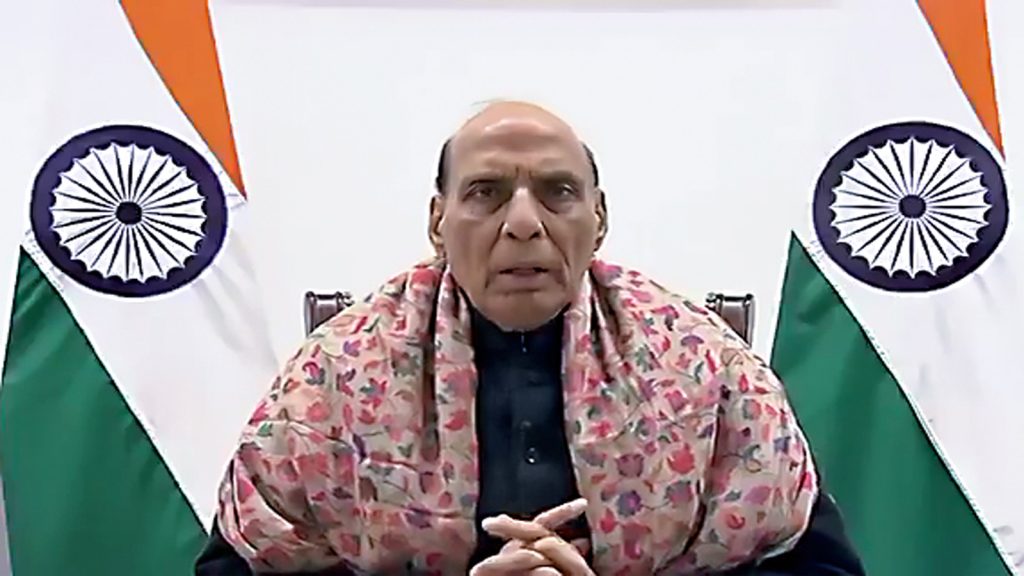
The government is committed to providing quality healthcare to every citizen, particularly those living in remote and island territories, Defence Minister Rajnath Singh said on Tuesday, while virtually addressing a Joint Services Multi-Speciality Mega Medical Camp organised by the Indian Navy in the Lakshadweep archipelago.
The nearly week-long camp, held at Indira Gandhi Hospital in Kavaratti, marks the first such joint, multi-speciality medical initiative in the islands. The Defence Minister described it as a shining example of the Navy’s expanding role in nation-building and humanitarian assistance beyond maritime security. He said the Tri-Services team from the Armed Forces Medical Services had brought advanced diagnostics and specialist care directly to the doorsteps of island residents, including planned surgeries and cataract operations.
Singh noted that comprehensive screening, early diagnosis, timely medical advice, medical interventions and the free distribution of medicines would yield long-term health benefits for the local community. He reiterated the government’s resolve to build a Swasth Bharat, highlighting initiatives such as Ayushman Bharat and Jan Aushadhi Kendras aimed at improving access and affordability in healthcare.
Formally inaugurating the camp, Chief of the Naval Staff Dinesh K Tripathi said the initiative was unique for its “synergy, scope and scale”. He explained that the camp represented a truly joint effort involving all three Services and the local administration; covered a wide range of specialities including cardiology, ophthalmology, nephrology, neurology, gastroenterology, dermatology and endocrinology; and involved the deployment of a large number of medical professionals and support personnel. Such initiatives, he said, strengthen inter-service coordination and civil–military cooperation while directly benefiting citizens.
Following the inauguration, the Naval Chief interacted with patients and distributed spectacles, eye drops and medicines to beneficiaries who had undergone cataract surgery. The ceremony was attended by senior naval and medical officials, representatives of the civil administration and members of the local community.
As part of the outreach, the Indian Navy is conducting multi-speciality camps across five islands – Amini, Androth, Agatti, Kavaratti and Minicoy – to ensure maximum coverage and accessibility. A dedicated ophthalmology team has been stationed at Kavaratti to carry out cataract surgeries, while surgical teams have also been deployed at Agatti and Minicoy to manage operative and procedural requirements.
In total, 29 medical officers, two nursing officers and 42 paramedical personnel from Armed Forces establishments across the country have been deployed. Medical equipment, stores and medicines have been augmented to complement Lakshadweep’s existing government healthcare system, enabling access to specialist and super-specialist services.
A major highlight of the camp has been the completion of nearly 50 sight-restoring surgeries in just two days, delivering advanced ophthalmic care to island residents. Several patients who had suffered from severe vision impairment regained their eyesight following successful procedures, symbolising the camp’s core mission of ensuring that even the most remote communities are not left behind.
Beyond clinical treatment, the initiative has emphasised holistic well-being in line with the vision of Prime Minister Narendra Modi. Residents were counselled on preventive healthcare, lifestyle changes, mental well-being and nutrition, including guidance on the benefits of millets and the practice of yoga to promote long-term health.
According to the Defence Ministry, the camp reflects the government’s broader commitment to equitable access to quality healthcare across the country and aligns with national initiatives aimed at integrating curative, preventive and promotive health services, even in India’s most geographically isolated regions.